Honey Properties: Composition and Benefits According to Science
Honey properties attract interest among people seeking to understand this food and its potential health benefits. But what does honey contain, why is its biological activity being studied, and which of its proposed benefits are supported by scientific evidence?
Answering these questions requires distinguishing between its composition, effects observed in laboratory studies, and outcomes evaluated in humans. Antioxidant or antibacterial activity identified experimentally does not, by itself, establish that consuming honey provides a specific clinical benefit.
This article explores honey’s composition, the factors that may influence its properties, and the evidence on its health applications. It also explains how honey can fit into a balanced diet and which precautions deserve consideration, offering a medical perspective on its potential uses and the limits of current knowledge.
What Is Honey and How Do Bees Produce It?
Understanding honey properties begins with knowing where honey comes from. Honey is a naturally sweet substance that bees produce from plant nectar or other sugary substances found on plants. Honey derived from nectar is called blossom honey, while honey produced from plant secretions or the excretions of sap-feeding insects is known as honeydew honey.
Bees collect these raw materials and transform them by adding enzymes and reducing their water content. Inside the hive, this process allows honey to mature in the honeycomb, where it serves as a food reserve for the colony.
Floral origin gives each honey its distinctive identity. Monofloral honeys come predominantly from one botanical source, whereas multifloral honeys contain nectar from different plants. This diversity contributes to differences in colour, aroma, and flavour. A floral designation should match the honey’s characteristics; the presence of a particular plant near the hive is insufficient to establish its botanical origin.
The region where honey is harvested also helps explain this diversity by placing it within a landscape with particular plant sources. Honey properties should therefore be understood in the context of botanical and geographical origin: the term “honey” encompasses products with different characteristics. Knowing its origin is a first step towards understanding its composition and interpreting research findings appropriately.
Honey Composition: What Does It Contain?
Honey properties are linked to its composition: a mixture of sugars and water accompanied by minor constituents. These include enzymes, organic acids, and phenolic compounds, whose profiles differ between honeys.
Sugars and Water: The Main Components
Fructose and glucose are the main sugars in honey. Together with water, they make up most of the product and account for its sweetness and energy content. Their proportions vary between honey samples.
Enzymes and Organic Acids
Honey contains enzymes such as invertase, diastase, and glucose oxidase. These participate in nectar transformation or contribute to its chemical characteristics. Honey also contains organic acids, notably gluconic acid, which contributes to its acidity. These constituents help explain honey properties and are also studied as quality indicators.
Phenolic Compounds: A Small Fraction of Scientific Interest
Phenolic compounds are substances associated with honey’s plant origin. Although present in small quantities relative to sugars, they receive particular attention for their contribution to antioxidant activity measured in laboratory assays. Studies comparing honey varieties have found differences in both phenolic content and this experimental activity.
Compounds identified in different samples include:
Phenolic acids, such as caffeic, p-coumaric, ferulic, and gallic acids.
Flavonoids, such as quercetin, kaempferol, chrysin, pinocembrin, and naringenin.
This list does not describe a universal composition: not all honeys contain the same compounds or the same concentrations. Chromatographic analyses reveal different profiles according to floral and geographical origin, supporting research into their use for characterising honey provenance.
Interpreting these findings requires distinguishing between detecting a compound, measuring a sample’s laboratory activity, and demonstrating a benefit in humans. Phenolic composition helps explain part of the scientific interest in honey; establishing its clinical relevance requires specific studies addressing the product, the amount consumed, and the outcome assessed.
Vitamins and Minerals: What Is Their Actual Contribution?
Honey can contain small amounts of vitamins and minerals, but its nutritional contribution is generally limited at usual serving sizes. It should therefore not be described as a substantial source of these micronutrients or a means of correcting nutritional deficiencies. Its value as a food and a subject of research should be assessed in the context of its overall composition.
Do All Honeys Have the Same Properties?
No. Honey properties vary according to origin and processing and storage conditions. Although honeys share a basic composition, they can differ in their minor constituents and in the biological activity measured in laboratory studies.
Floral and Geographical Origin
The plants from which bees collect nectar help shape honey’s chemical profile. Comparative studies have found differences in the antioxidant and antibacterial activity of samples from different botanical and geographical origins. These experimental findings do not, by themselves, establish that consuming one variety provides greater clinical benefits.
Knowing its provenance therefore helps characterise honey, but a floral designation or harvesting region does not guarantee a particular therapeutic activity. Even bacterial responses can differ depending on the microorganism and honey sample tested.
Processing and Storage
Honey properties can also change after harvesting. Heating temperature and duration, together with storage time and conditions, can affect quality indicators such as diastase activity and hydroxymethylfurfural —HMF— content. HMF forms during sugar transformation and is used to assess aspects of the product’s thermal history and storage.
However, these changes do not justify claiming that any heating destroys all honey properties. Effects depend on the treatment and the constituent or activity measured; a study of processing and storage assessed physicochemical quality and antioxidant capacity separately.
What Does This Mean When Interpreting Research?
Findings obtained with a specific honey should be interpreted in light of the product studied, how it was prepared, and the outcome assessed. Antibacterial activity observed in the laboratory, for example, does not establish that consuming any honey can treat an infection.
This diversity makes honey a food of scientific interest and explains why its potential applications require specific studies. The next section examines the biological properties under investigation and distinguishes these findings from benefits evaluated in humans.
Honey Properties: What Have Studies Found?
Honey properties are investigated from several perspectives: antioxidant and antibacterial activity, modulation of inflammation, and potential effects on organs and metabolic processes. Interpreting these findings requires distinguishing laboratory experiments and animal studies from outcomes assessed in humans.
Antioxidant Activity
Laboratory studies show that different honeys exhibit antioxidant activity, with differences associated partly with their phenolic composition. Experimental assays allow researchers to compare samples, but their results do not directly establish that consuming honey prevents disease.
Antibacterial Activity
Antibacterial activity is another experimentally investigated honey property. Tests involving microorganisms have shown that different samples can inhibit bacterial growth, although the magnitude varies with the honey and bacterium tested. These findings support research into specific applications but do not establish that eating honey can treat an infection.
Modulation of Inflammation
Honey has shown effects on inflammatory processes in animal models. For example, a study of cisplatin-induced kidney injury observed reduced inflammation and activation of NF-κB, a pathway involved in inflammatory responses. This provides a potential biological explanation for the effects observed in that model; clinical efficacy requires evaluation in humans.
Kidney Protection Against Drug-Induced Injury: Experimental Evidence
Potential kidney protection is a relevant research area. In a study involving rats exposed to cisplatin, Tamarix honey reduced indicators of oxidative stress, inflammation, and kidney tissue injury. Researchers also observed changes in pathways associated with antioxidant defences and cell death. This is animal evidence involving a specific preparation.
The narrative review by Jagua-Gualdrón and colleagues, Apitherapy for drug-induced kidney disease: a narrative review on its mechanisms —DOI: 10.1515/jcim-2025-0082—, examines apitherapy in this context. Its scope encompasses bee products and mechanisms of drug-induced kidney disease; it should therefore not be interpreted as clinical proof that honey prevents nephrotoxicity.
These findings support further research but do not establish an indication for consuming honey as protection during chemotherapy or justify extrapolating animal doses to patients.
Ageing and Cognitive Function: An Area of Research
The relationship between honey and ageing has been explored through studies of brain function, among other approaches. Research involving young and aged rats exposed to noise stress found that Tualang honey improved performance in memory tests and reduced indicators of brain oxidation compared with stressed animals receiving no honey.
These findings suggest research potential concerning protection against oxidative damage in specific models. They do not demonstrate that honey delays human ageing, extends lifespan, or prevents dementia: those outcomes require dedicated studies.
Diabetes and Glucose Regulation
The review by Jagua-Gualdrón and colleagues, Apitherapy for diabetes mellitus: mechanisms and clinical implications —DOI: 10.1515/jcim-2024-0367—, examines preclinical and clinical evidence on bee products and diabetes-related processes, including oxidative stress, inflammation, and metabolic control. Its conclusions require interpretation according to the product and study design; findings involving other bee products cannot automatically be attributed to honey.
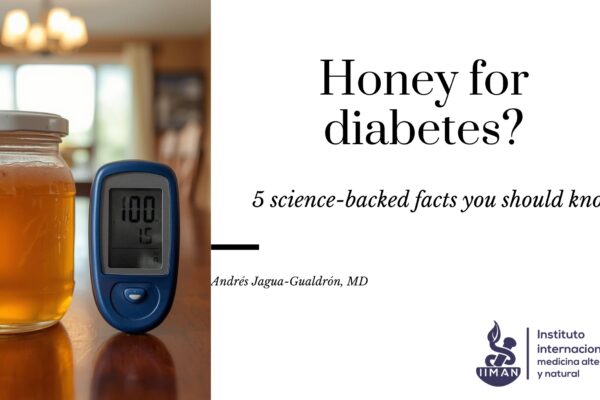
Human evidence on honey requires careful interpretation. A meta-analysis of controlled trials found a small reduction in fasting glucose, with low-certainty evidence and predominantly healthy participants. Conversely, a trial involving people with type 2 diabetes reported an increase in glycated haemoglobin —HbA1c— after eight weeks of honey consumption.
Consequently, honey properties do not justify presenting it as a glucose-lowering treatment. Its inclusion in the diet of people with diabetes should account for carbohydrate intake, glycaemic control, and individual assessment.
Cholesterol and Lipid Metabolism
Honey’s potential effects on cholesterol have also been evaluated in humans. One meta-analysis found small reductions in total cholesterol, LDL cholesterol, and triglycerides, with low-certainty evidence for these outcomes. However, another meta-analysis found no statistically significant effects on the lipid profile.
Available evidence supports discussing potential effects on metabolic markers, with findings that are not consistent across analyses. Changes in blood cholesterol do not, by themselves, establish the underlying mechanism or demonstrate a reduction in heart attack risk. Honey should be considered within the broader context of diet and medical management of cardiovascular risk.
Other Honey Properties
Beyond the experimental mechanisms described above, some honey properties have been investigated in humans for specific applications. These include cough relief, healing of certain wounds, and prevention of oral mucositis in selected cancer treatment settings. Benefits depend on the indication, product, and method of administration.
Honey for Cough Relief: Clinical Evidence
Honey may help relieve acute cough in children older than one year. A Cochrane review concluded that it probably reduces symptoms and improves sleep compared with no treatment. Studies mainly assessed brief interventions, so these findings concern short-term symptom relief.
This benefit does not mean that honey eliminates the cause of the cough. Furthermore, honey must not be given to infants younger than 12 months, because of the risk of infant botulism.
Medical-Grade Honey and Wound Healing
Medical-grade honey is bee-produced honey that has been selected, quality-tested, and sterilised for clinical application, particularly wound care. It can be used in specialised preparations or dressings. The term describes these controls and its intended use; it does not refer to a different floral variety. Honey intended for food consumption should therefore not automatically be considered equivalent to a preparation designed for wound care.
Honey and Oral Mucositis Associated with Cancer Treatment
Oral mucositis is an inflammatory injury to the lining of the mouth that can develop during cancer treatment and make eating or swallowing difficult. Honey has been investigated as a supportive intervention in this setting.
The 2020 MASCC/ISOO guidelines suggest honey for preventing oral mucositis in patients with head and neck cancer receiving radiotherapy, with or without concurrent chemotherapy. Its classification as a suggestion reflects study limitations, including small samples and differences between the honey products used.
This application aims to support mucosal care during a specific treatment. Its use should be agreed with the oncology team, who will determine the appropriate product and protocol. It is not a tumour treatment, and the benefit cannot be generalised to every chemotherapy regimen.
How Can Honey Fit into a Healthy Diet?
Honey properties reflect a composition that combines sugars, organic acids, enzymes, and phenolic compounds. This food matrix explains the interest in its metabolic effects and allows honey to be considered beyond its sweetening capacity.
Some small clinical studies have observed a lower glycaemic response to honey than to glucose or sucrose in specific comparisons. These findings suggest that its metabolic effects can differ from those of other sweeteners, although responses depend on the variety, amount, and study conditions.
Choose pure honey without added syrups and with a traceable origin, preferably using it to replace other sweeteners. It can accompany plain yoghurt, oats, or homemade dishes, with portions adjusted to individual needs and the overall diet.
Studies involving healthy adults have used 70 g daily, but these findings do not establish a general recommendation for people with diabetes. Results in this population are inconsistent: a trial using 50 g daily found no significant changes in fasting glucose but a less favourable HbA1c trajectory compared with the control condition.
The practical recommendation is therefore to consume authentic honey in individualised portions. Purity matters for product quality, while the appropriate amount depends on health status, diet, and, in people with diabetes, monitoring of glycaemic control. Quantities used in research do not constitute a universal dose for obtaining health benefits.
Precautions When Using Honey
When considering honey properties, a few precautions deserve attention. Honey must not be given to infants younger than 12 months: some honeys may contain Clostridium botulinum spores, which can germinate in an infant’s intestine and produce the toxin responsible for infant botulism. Not all honey is contaminated, but this possibility warrants avoiding all honey during the first year of life. This is a microbiological risk, not an allergy.
An allergic reaction to one honey does not necessarily establish an allergy to every variety. It may involve pollen from particular botanical sources, but bee-derived proteins and cross-reactivity can also play a role. Anyone with a previous reaction should seek an allergy assessment before trying other honeys.
People with diabetes should adjust consumption to their dietary plan and glycaemic control. For wound application, use preparations suitable for clinical care and follow the responsible healthcare professional’s instructions.
Frequently Asked Questions About Honey
Does Crystallised Honey Lose Its Properties?
Crystallisation is a natural process influenced by honey’s composition and storage conditions. It does not, by itself, indicate spoilage or establish adulteration. Some varieties crystallise faster than others; liquid honey is not necessarily of lower quality.
Does Heating Honey Destroy Its Properties?
The effect depends on temperature and exposure time. Heating can reduce the activity of certain enzymes and change quality indicators, but this does not mean that any exposure to heat destroys all honey properties. Avoiding intense or prolonged heating can help preserve its characteristics.
Does Darker Honey Provide Greater Benefits?
Colour alone cannot establish clinical superiority. Some studies report associations between darker colour, phenolic content, and laboratory antioxidant or antibacterial activity. These findings do not demonstrate greater health benefits in humans.
How Can You Tell Whether Honey Is Pure?
Appearance, flavour, and crystallisation cannot independently confirm authenticity. Home tests do not replace specialised analyses. Choose honey with a traceable origin and clear producer information; investigating possible adulteration requires appropriate analytical methods.
Conclusions
Honey properties reflect the diversity of its composition and floral and geographical origins. Phenolic compounds, enzymes, and organic acids help explain the scientific interest in this food.
Evidence supports specific applications, including cough relief and selected local uses in wound care or oral mucositis prevention. Other research areas, such as kidney protection and ageing-related processes, retain a substantial experimental component.
A scientific assessment recognises honey’s potential while identifying the product, application, and benefit actually studied. Choosing authentic honey and individualising consumption supports informed dietary use, while therapeutic applications require a specific assessment.
Scientific References
Tomás-Barberán FA, Martos I, Ferreres F, Radovic BS, Anklam E. HPLC flavonoid profiles as markers for the botanical origin of European unifloral honeys. J Sci Food Agric. 2001;81(5):485–496. doi:10.1002/jsfa.836.
Jagua-Gualdrón A, García-Reyes NA, Fernández-Bernal RE. Apitherapy for diabetes mellitus: mechanisms and clinical implications. J Complement Integr Med. 2025;22(2):228–236. doi:10.1515/jcim-2024-0367.
Jagua-Gualdrón A, García-Reyes NA, Africano-Lopez HL. Apitherapy for drug-induced kidney disease: a narrative review on its mechanisms. J Complement Integr Med. 2026;23(1):33–42. doi:10.1515/jcim-2025-0082.
Hamad R, Jayakumar C, Ranganathan P, Mohamed R, El-Hamamy MMI, Dessouki AA, et al. Honey feeding protects kidney against cisplatin nephrotoxicity through suppression of inflammation. Clin Exp Pharmacol Physiol. 2015;42(8):843–848. doi:10.1111/1440-1681.12433.
Ahmed A, Tul-Noor Z, Lee D, Bajwah S, Ahmed Z, Zafar S, et al. Effect of honey on cardiometabolic risk factors: a systematic review and meta-analysis. Nutr Rev. 2023;81(7):758–774. doi:10.1093/nutrit/nuac086.
Sadeghi F, Salehi S, Kohanmoo A, Akhlaghi M. Effect of natural honey on glycemic control and anthropometric measures of patients with type 2 diabetes: a randomized controlled crossover trial. Int J Prev Med. 2019;10:3. doi:10.4103/ijpvm.IJPVM_109_18.
Oduwole O, Udoh EE, Oyo-Ita A, Meremikwu MM. Honey for acute cough in children. Cochrane Database Syst Rev. 2018;(4). doi:10.1002/14651858.CD007094.pub5.
Jull AB, Cullum N, Dumville JC, Westby MJ, Deshpande S, Walker N. Honey as a topical treatment for wounds. Cochrane Database Syst Rev. 2015;(3). doi:10.1002/14651858.CD005083.pub4.
Elad S, Cheng KKF, Lalla RV, Yarom N, Hong C, Logan RM, et al. MASCC/ISOO clinical practice guidelines for the management of mucositis secondary to cancer therapy. Cancer. 2020;126(19):4423–4431. doi:10.1002/cncr.33100.
About the Author
Dr. Andrés Jagua-Gualdrón
Physician – Apitherapy Specialist
Director, International Institute of Alternative and Natural Medicine (IIMAN)Dr. Andrés Jagua-Gualdrón is a physician and apitherapy specialist with extensive clinical and scientific experience in the therapeutic use of bee products. He serves as Director of the International Institute of Alternative and Natural Medicine (IIMAN), where he leads research and professional training initiatives focused on evidence-based natural therapies.He is also a scientific communicator and international lecturer, recognized for his work in promoting apitherapy as a complementary therapeutic approach supported by clinical and biomedical research.

Author